Dueling Dinosaurs
The Dueling Dinosaurs exhibit, opened in April 2024 at the North Carolina Museum of Natural Sciences, centers on a working Paleontology lab and explores the questions that arise as the SECU DinoLab’s paleontology team research the Dueling Dinosaurs fossil. This fossil contains the near-complete remains of two animals, a Nanotyrannus and a Triceratops, buried together 67 million years ago.
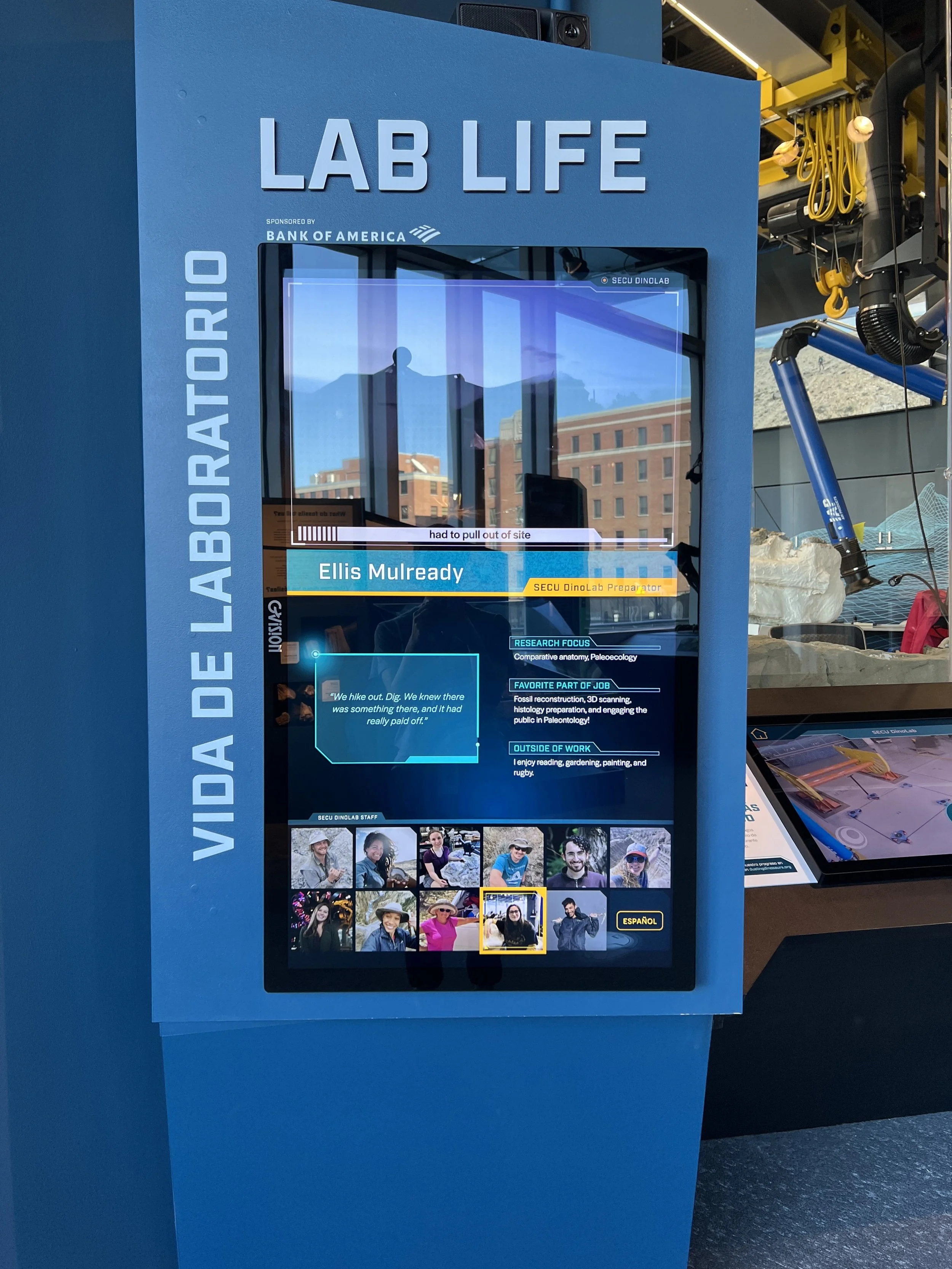
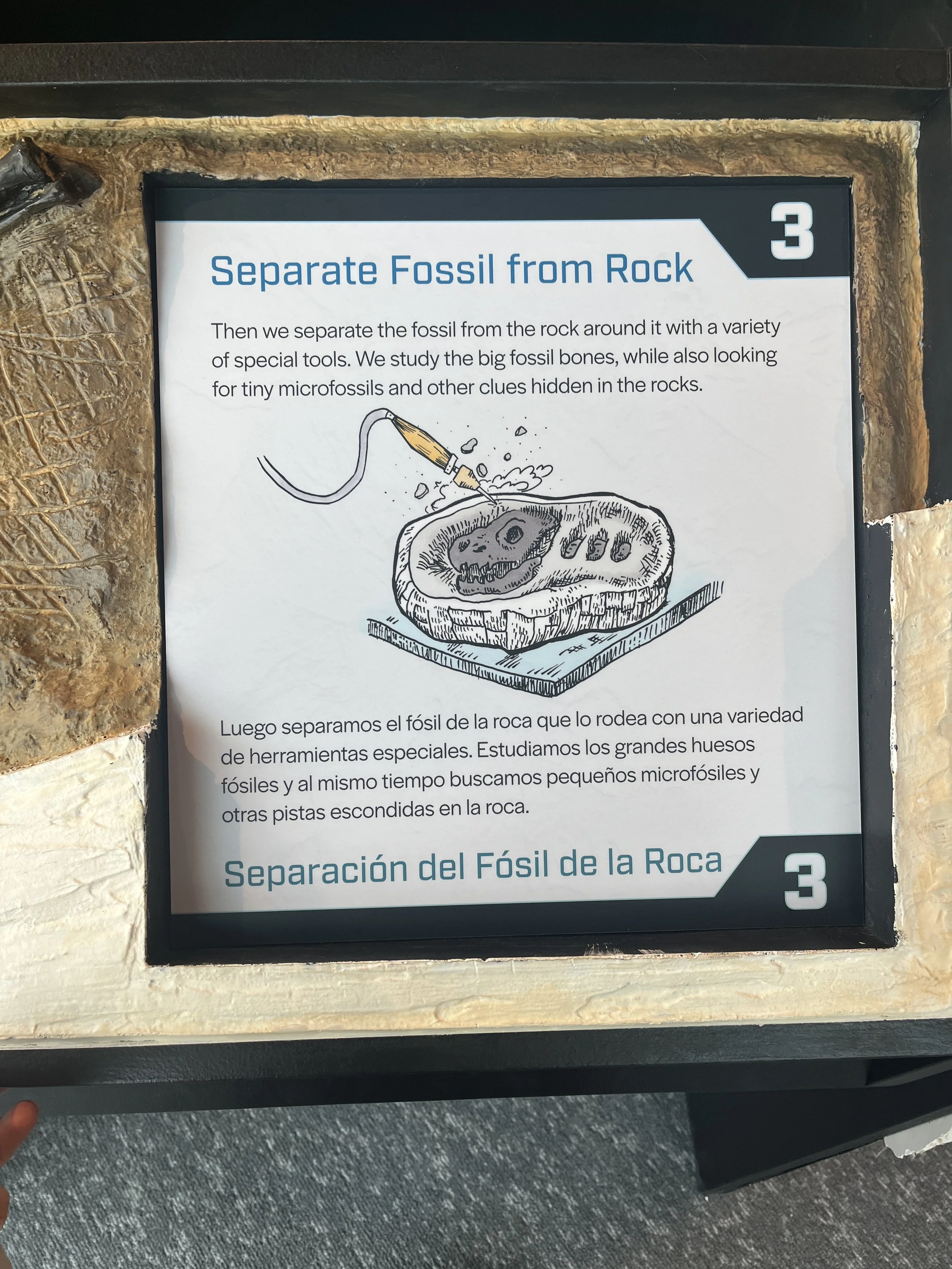
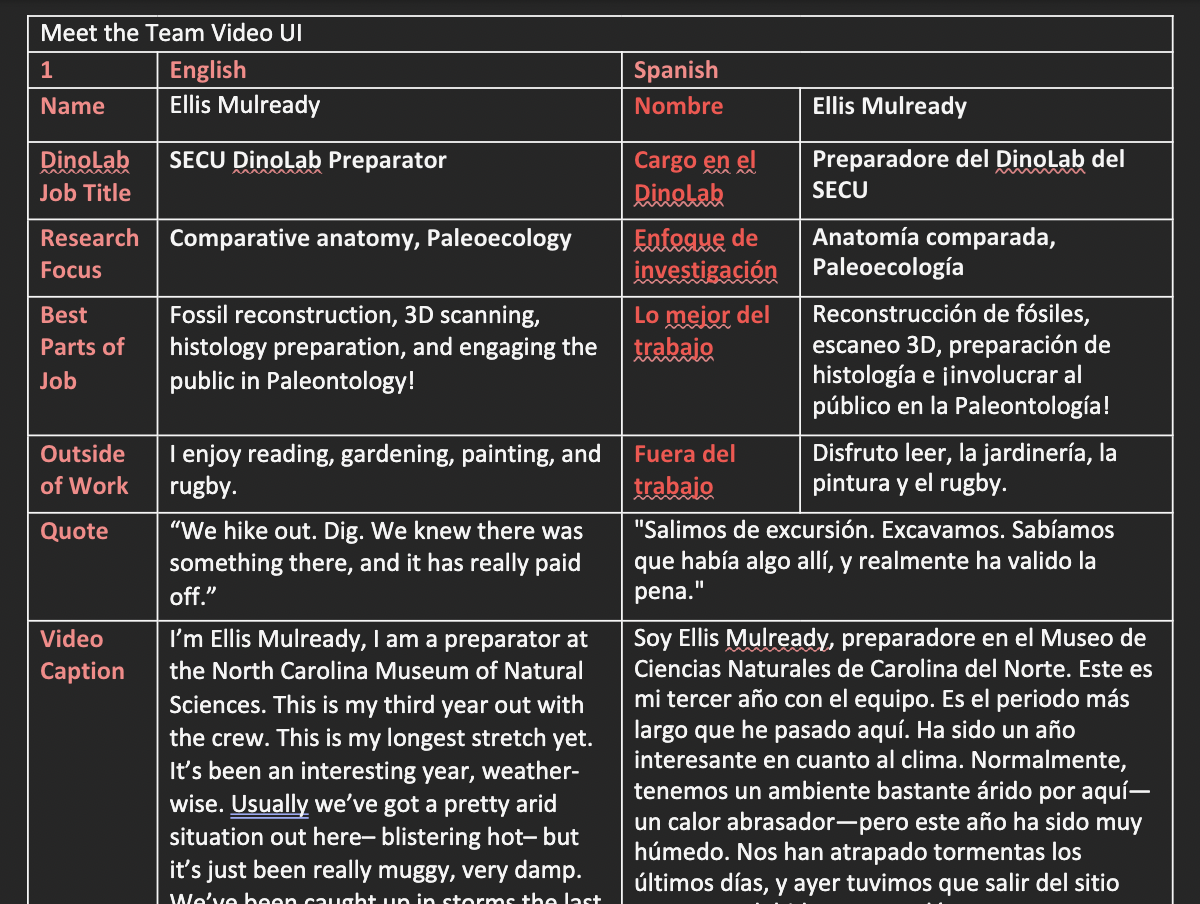
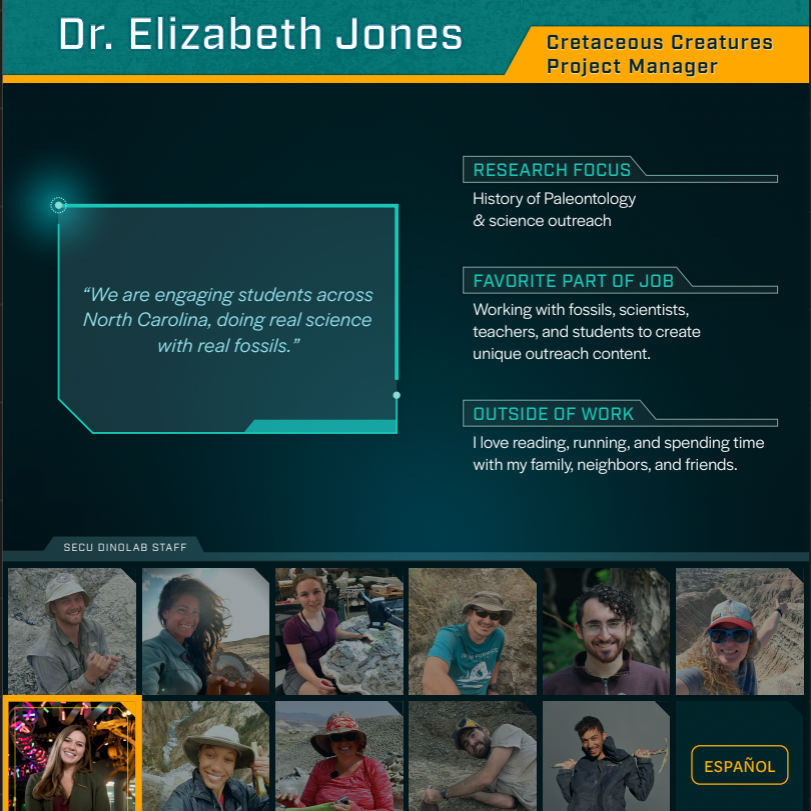
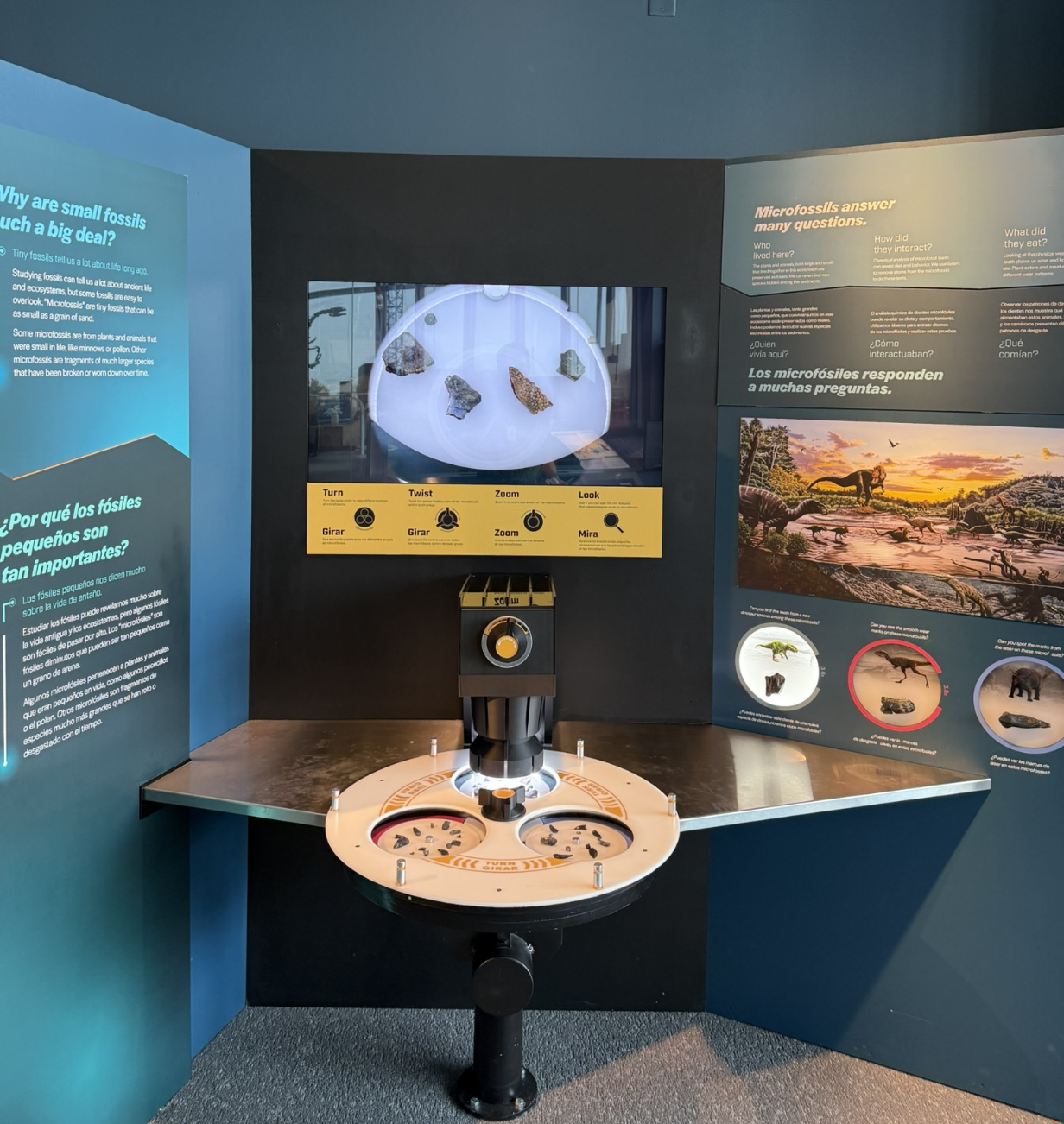
I joined the project in 2023 as an Exhibit Developer. My contributions include content development and copywriting for Zone 2: the Public Lab. This area of the Dueling Dinosaurs exhibit invites visitors to become paleontologists themselves— touching, observing, and exploring real fossils. My primary project in this section of the exhibit was the “Meet the Team” video interactive, highlighting stories and lessons from scientists in the DinoLab. Other work in Zone 2 includes writing interpretive labels for the fossil egg nest, Nothronychus model, and Willo specimen, and collaboration with an in-house illustrator for the Fossil “flipper” interactive, and working closely with Exhibits designers and community members to prototype and finalize the Microfossils interactive.
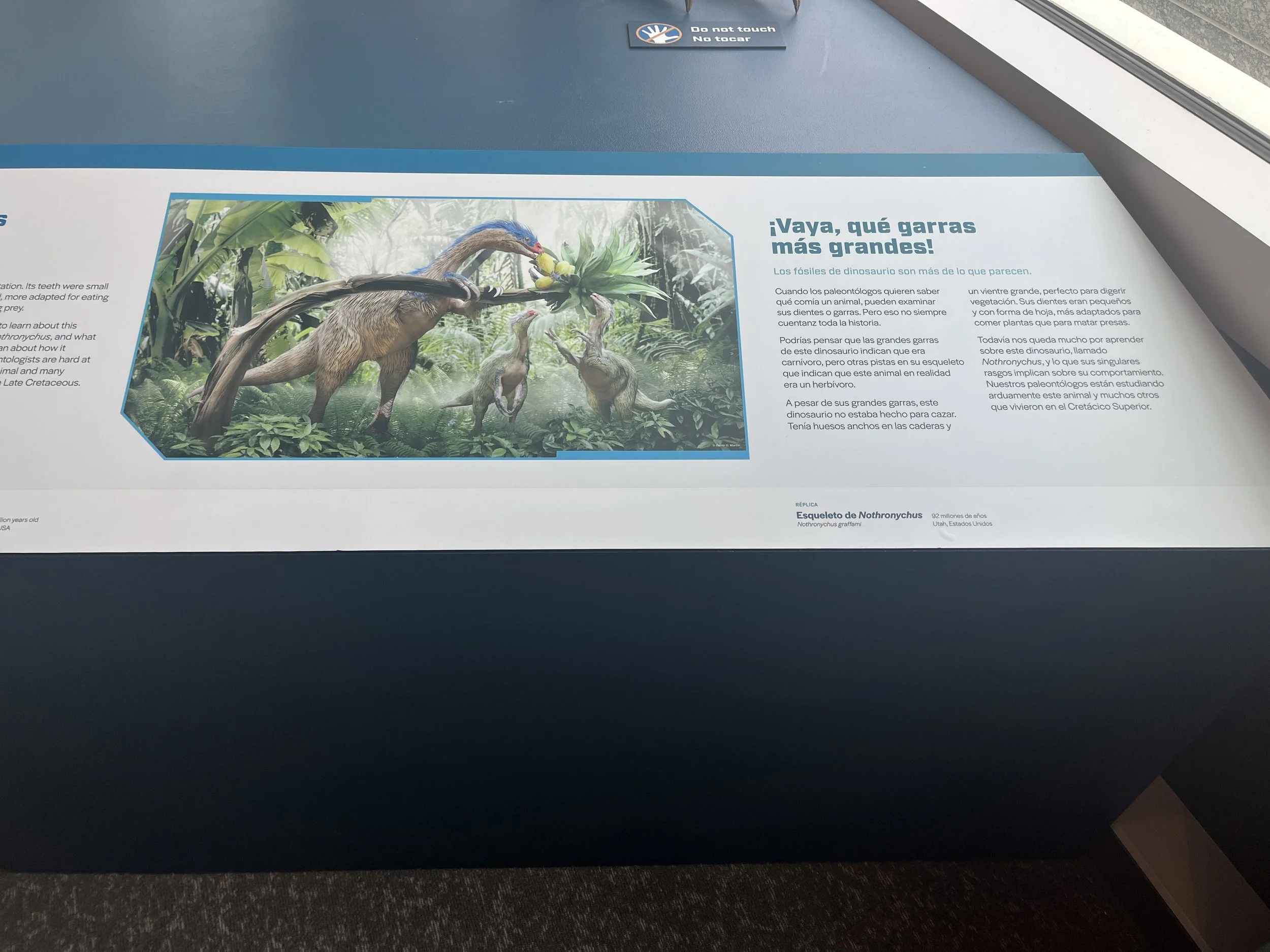
My, what big claws you have!
Dinosaur fossils are more than meets the eye.
When a paleontologist wants to learn what an animal ate, they can look at its teeth or claws. But that doesn’t always tell the full story.
You might think that this dinosaur was a carnivore because of its enormous claws, but other clues in its skeleton indicate that this animal was a plant-eater.
This dinosaur was not built for hunting. It had broad hip bones and a large pot belly, perfect for digesting vegetation. Its teeth were small and leaf-shaped, more adapted for eating plants than killing prey. We still have a lot to learn about this animal, called Nothronychus. Our team of paleontologists is currently studying if its growth rate and life history are different from its carnivorous kin.
—
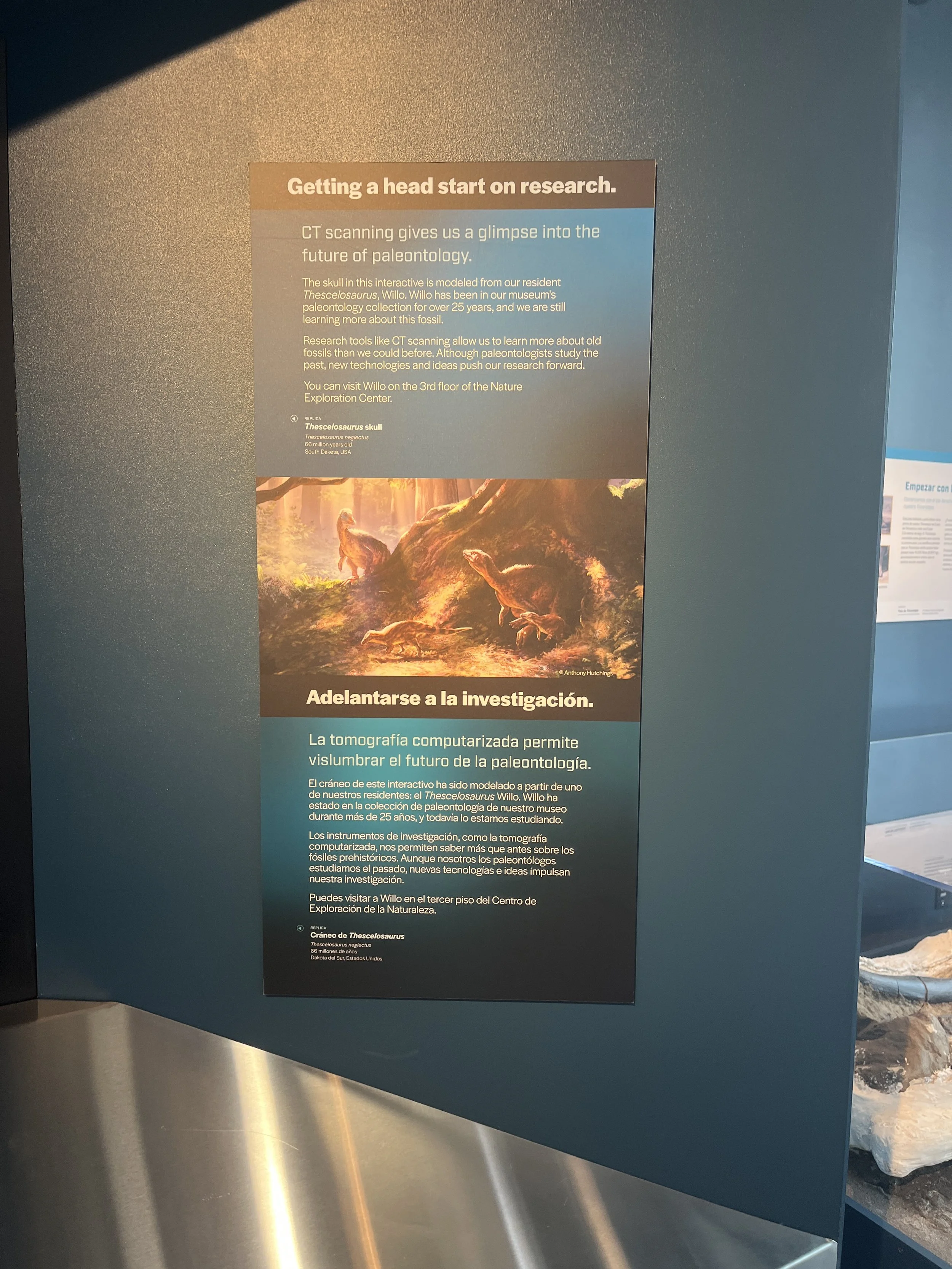
Getting a head start on research.
CT scanning gives us a glimpse into the future of paleontology.
The skull in this interactive is modeled from our resident Thescelosaurus, Willo. Willo has been in our museum's paleontology collection for over 25 years, and we are still learning more about her.
Research tools like CT scanning allow us to learn more about old fossils than we ever have been able to before. While paleontologists study the past, new technologies and ideas push our research forward.
You can visit Willo on the 3rd floor of the Nature Exploration Center.
—
Meet the Team video draft: Dr. Elizabeth Jones
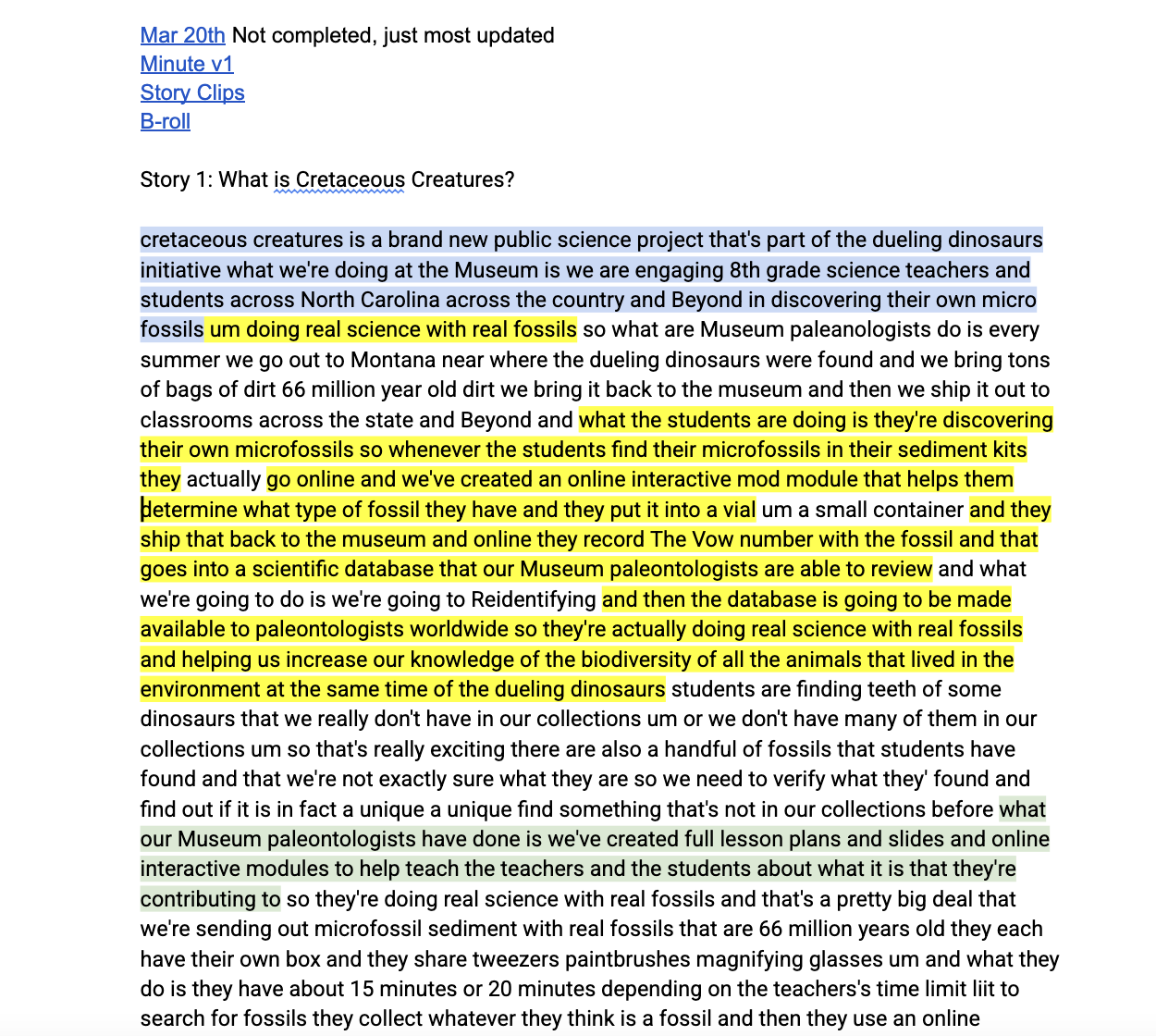
The “Meet the Team” video interactive involved multiple interviews, content edits for clarity and story cohesion, and filming for B-roll.
